

Welcome to the Demo Laboratory
Understanding how molecular machines work is essential for uncovering the principles of life and developing new therapeutic strategies. At the Demo Laboratory, we investigate the structural and mechanistic basis of protein synthesis and its regulation across bacteria and archaea. Our research combines structural biology with quantitative biochemistry to reveal how ribosomes and other macromolecular complexes assemble, function, and respond to environmental and cellular stress.
We are particularly interested in the dynamic processes that govern ribosome biogenesis, ribosome quality control, and translational regulation. Rather than studying static molecular structures, we aim to capture biological processes as they occur, revealing the sequence of structural transitions that underlie fundamental cellular mechanisms. Beyond bacterial and archaeal translation, we investigate the viral replication/transcription complexes to understand how viruses replicate and effect the host translation machinery.
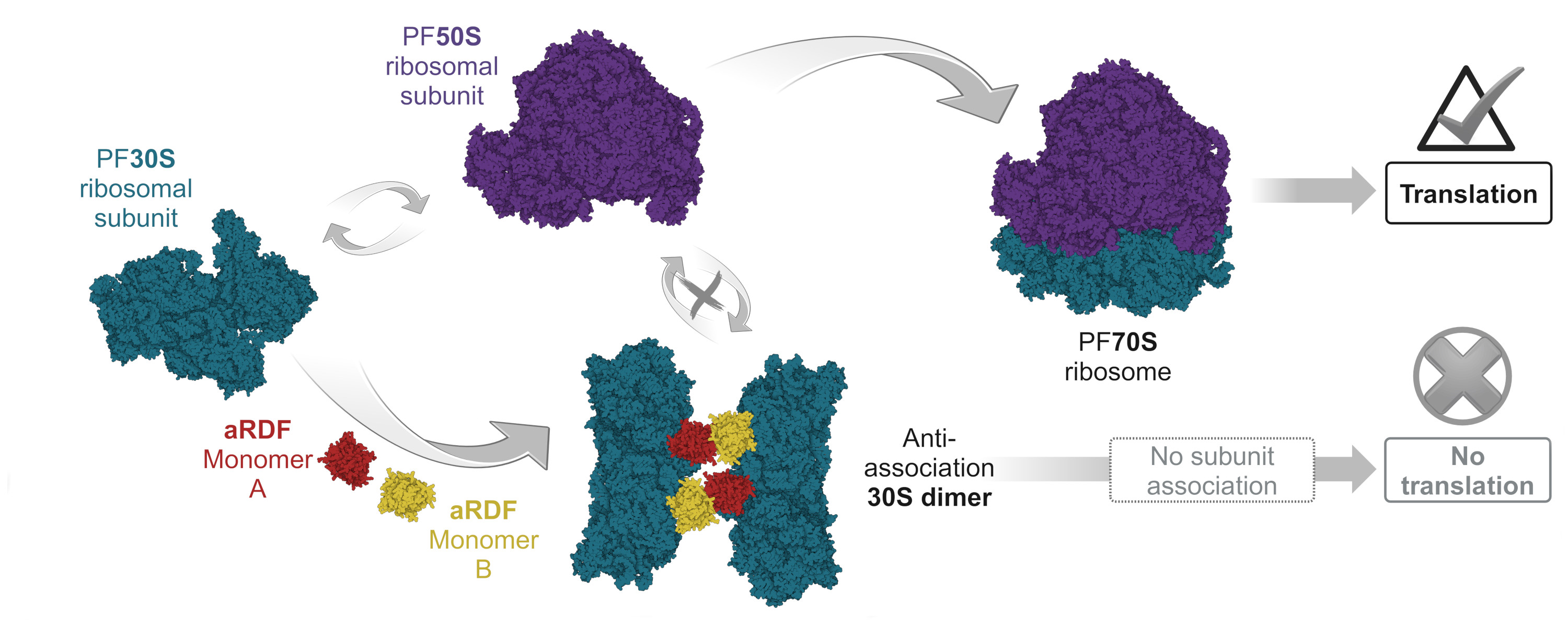
Proposed mechanism of aRDF-mediated translational regulation in the hyperthermophilic archaeon Pyrococcus furiosus. aRDF functions as an anti-association factor by promoting 30S subunit dimerization and preventing association with the 50S subunit.
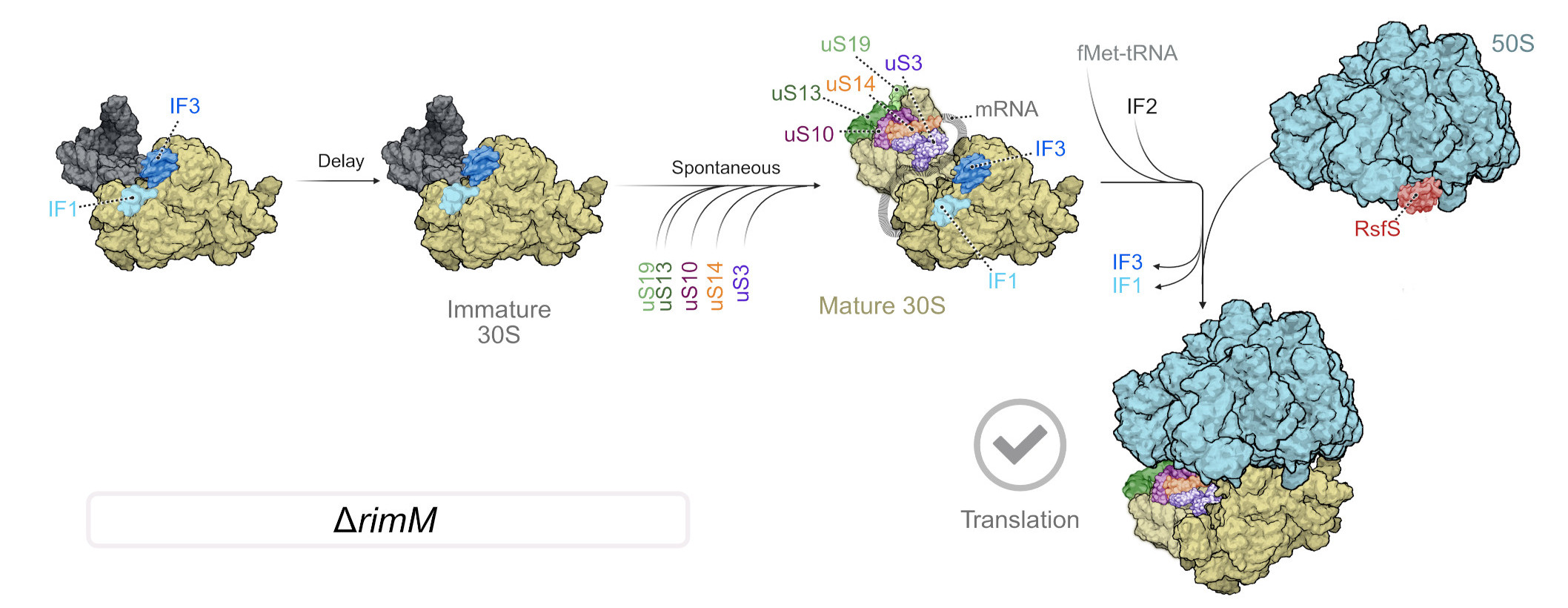
Model for 70S assembly and translation recovery in the ΔrimM strain. Delayed maturation of the 30S head domain results in prolonged IF1/IF3 binding and RsfS-mediated inhibition of subunit joining until ribosome assembly is complete, allowing translation to resume.
Our Vision
Fundamental discoveries become most powerful when they provide a framework for solving real biological and medical challenges. We strive to bridge basic molecular biology with biomedical applications by uncovering the mechanisms that control protein synthesis and host–pathogen interactions. Through interdisciplinary research, we aim to generate knowledge that advances our understanding of cellular regulation while creating new opportunities for the development of antimicrobial and antiviral therapies. We believe that revealing how molecular machines function is the first step toward learning how they can be manipulated for therapeutic benefit.